

NATO Class III UAS (650-900 kg Maximum Takeoff Weight), Unmanned Aircraft System.
Solving Defence and Energy Operational Challenges
Dual-Use DEFENCE Technologies

AVILUS <> NGTE
NGTE is an Edmonton-based company positioned in the defence supply chain with specialized UAS (Unmanned Aircraft System) NATO Class III technologies. In collaboration with AVILUS Germany, we are offering in Canada military-grade dual-use UASs for various applications: Rescue, supply, surveillance, intelligence & reconnaissance.
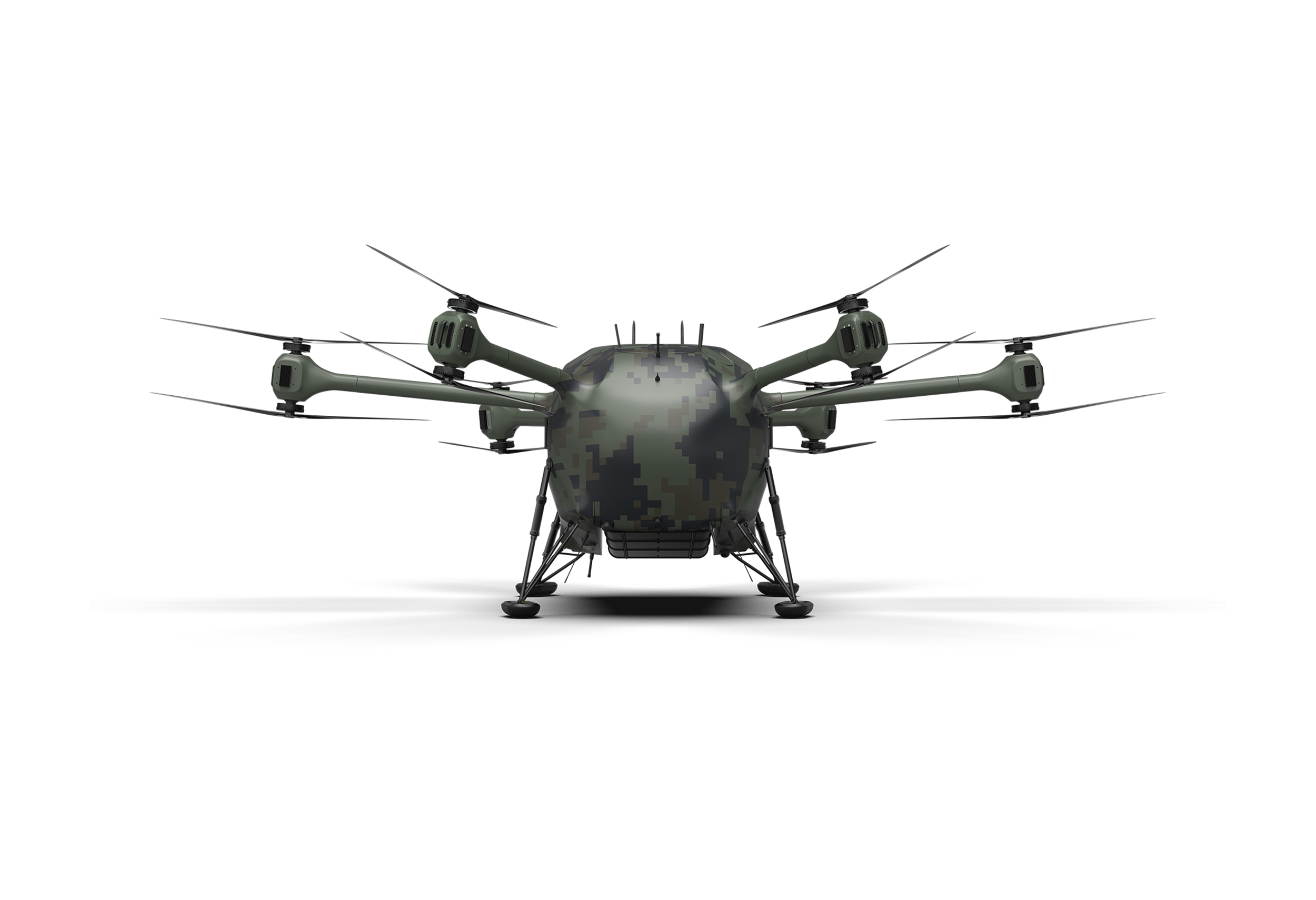
GRILLE - Fast Response. Tactical Simplicity.
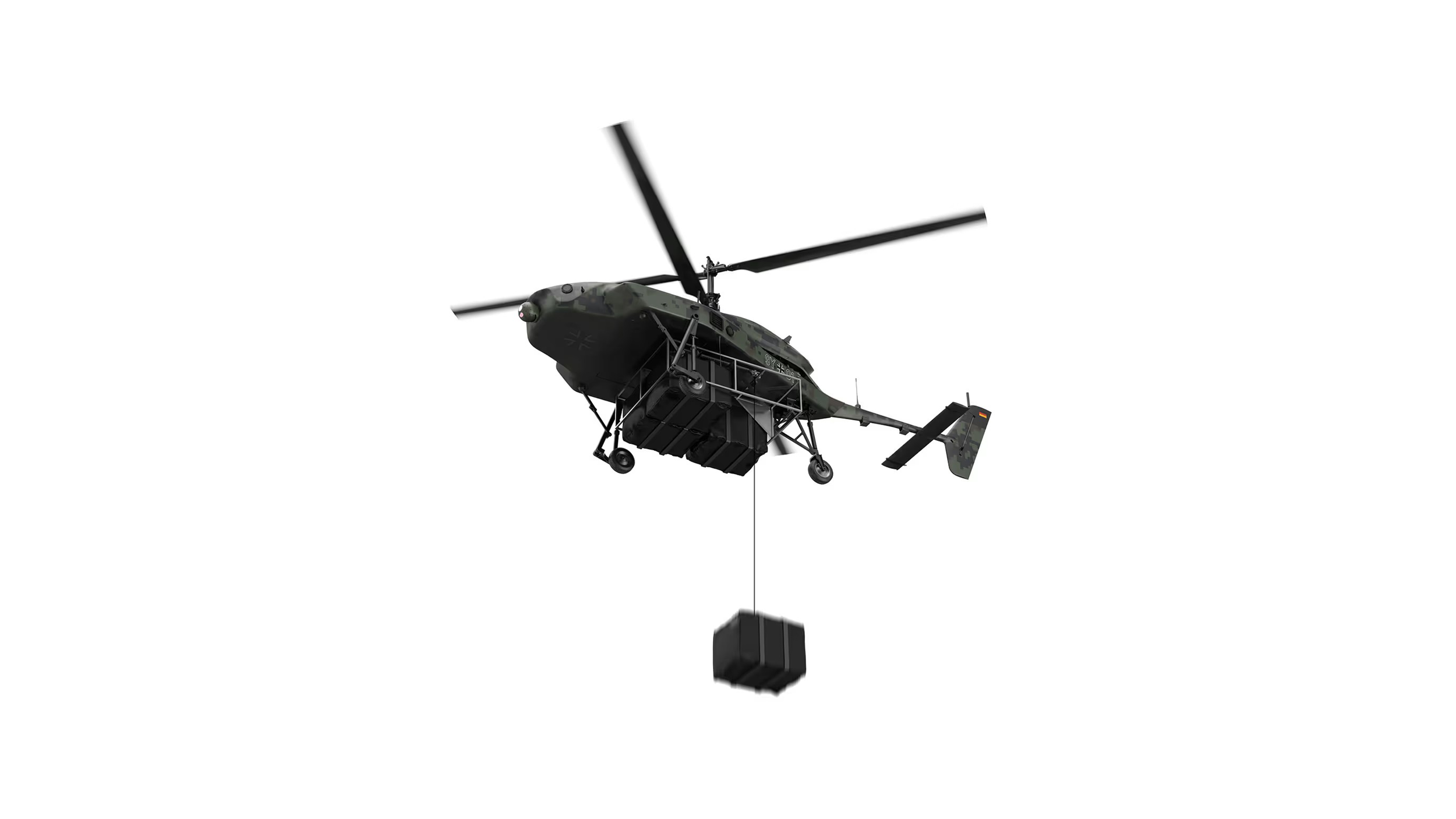
WESPE - Multi-Role. Operational Flexibility.
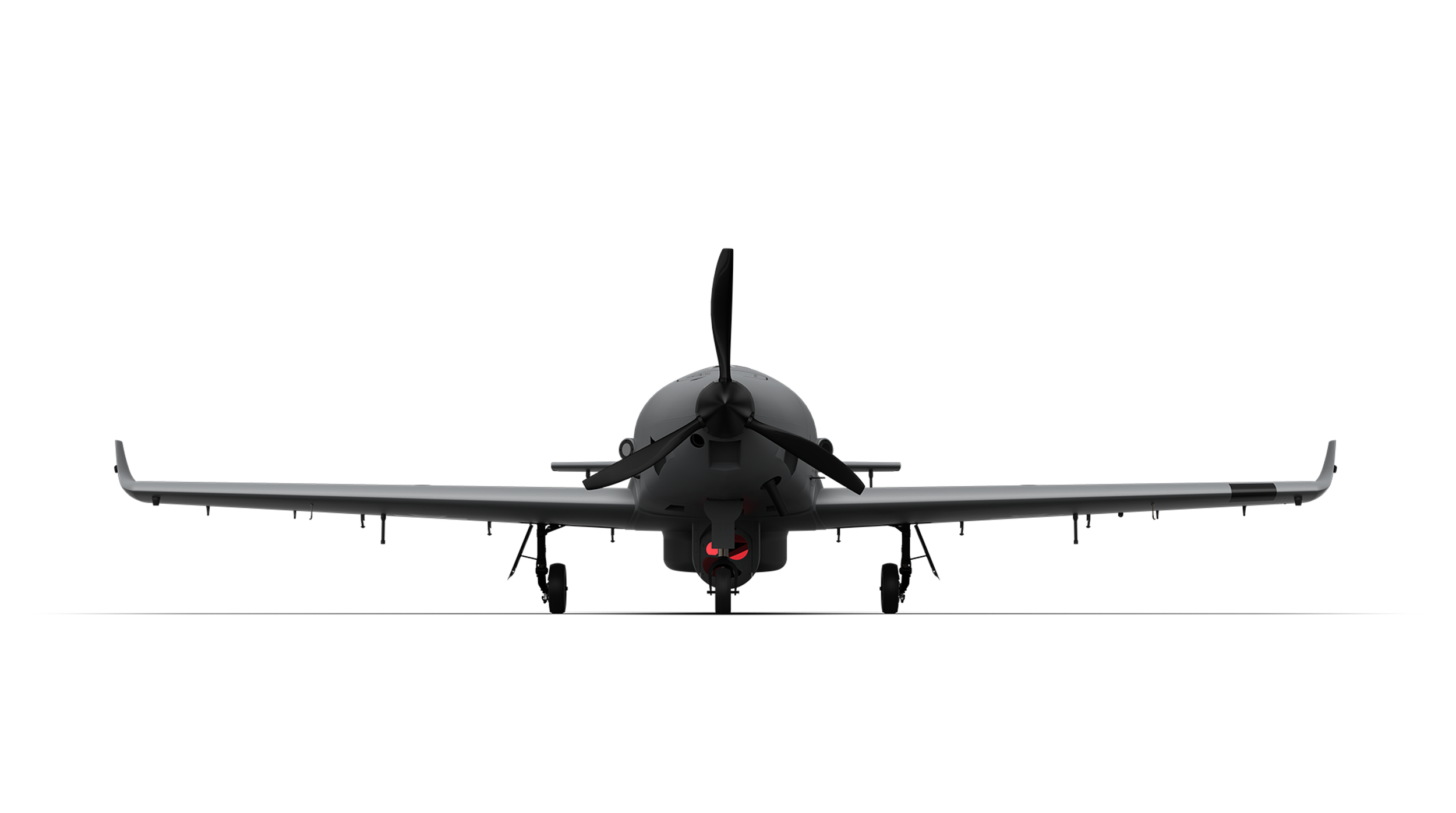
BUSSARD - Long Range. Strategic Intelligence.
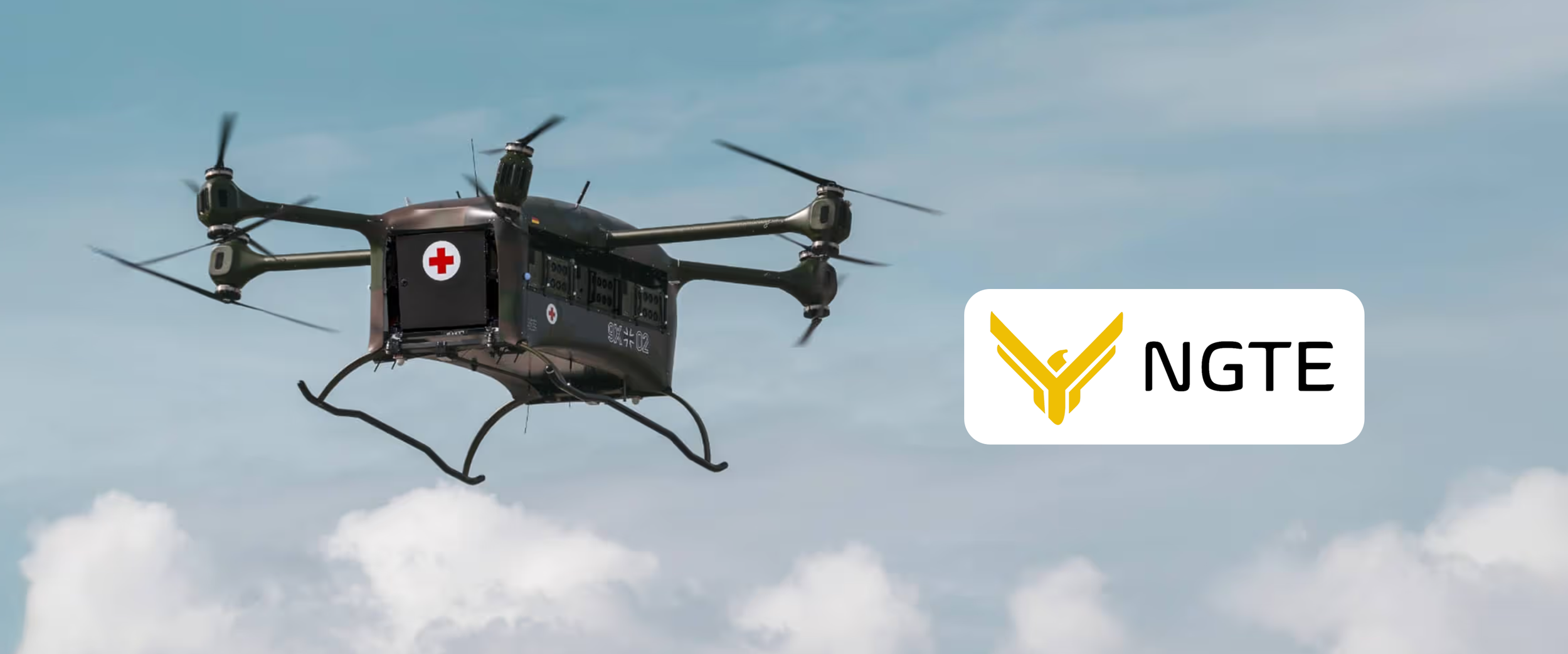
Grille is an uncrewed aircraft for patient transport.
A Game Changer in Sustainment
Many years of practical experience and clinical research in emergency medicine have proved that mortality and time to operation are heavily correlated. The longer the free therapy interval, the lower the survival probability of the patient — especially for penetrating traumas such as gunshot wounds. Delay to the operating room of more than 10 minutes increases the risk of mortality by up to threefold.
Medical Evacuation
The aircraft complements the standard assets of the evacuation chain and acts as a force multiplier for existing capacities. When operational or tactical circumstances demand additional resources, the system can be rapidly deployed.
Emergency Resupply
Short-Range Logistics with Modular Payloads. Enhances frontline logistics by complementing standard supply methods with on-demand delivery. When operational tempo, terrain, or threat conditions exceed the capacity of conventional assets, Grille serves as a force multiplier.
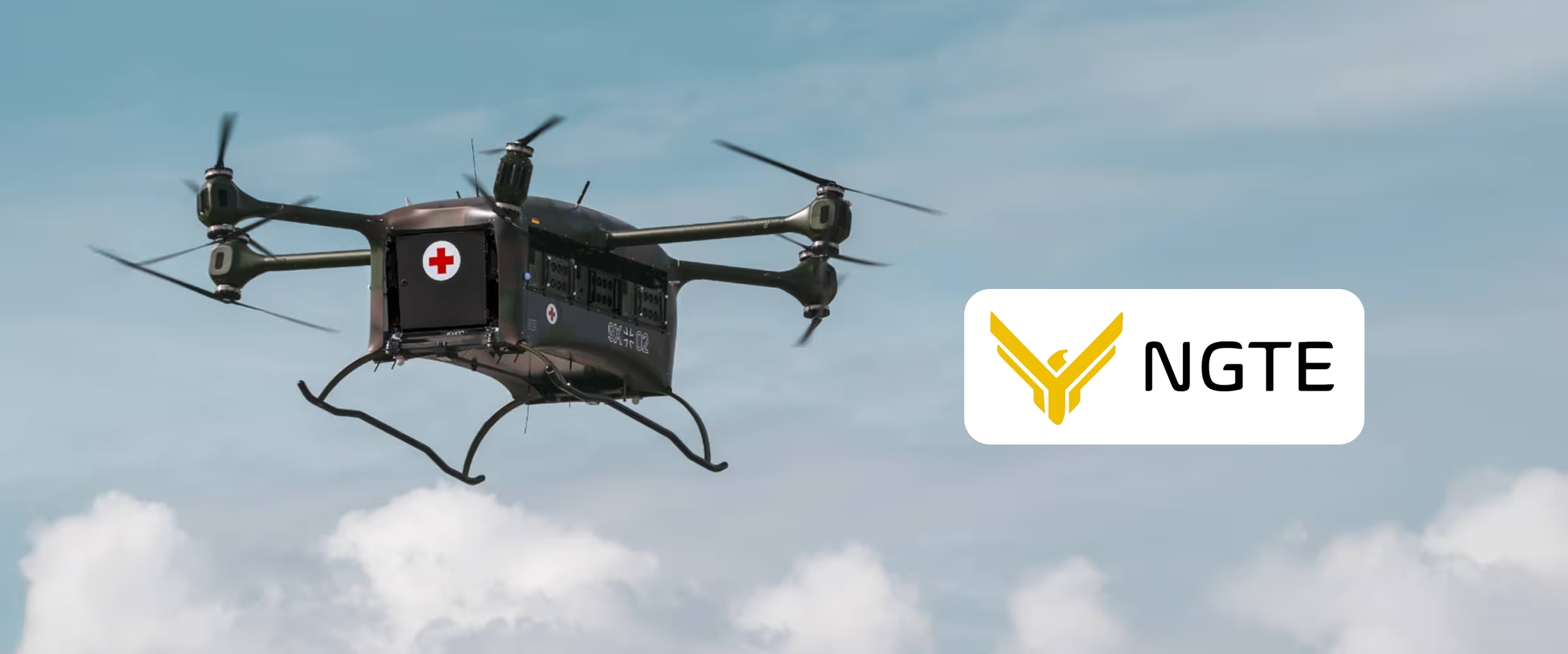
Wespe enables mid-range transport of various tactical payloads.
A Force-Multiplier by Design
Crewed helicopters are limited, highly risk exposed, and not always available. Yet, Role 2 to Role 3 transport remains critical. Especially missions at sea or across dispersed areas are critical.
Ground-based convoys are vulnerable, and helicopters need crews and infrastructure. Light drones lack range and payload capacities. The mid-range resupply gap remains unaddressed.
Manned helicopters are powerful but costly and exposed. Forces need precision effects from a platform that’s scalable, survivable, and crew-independent.
Medical Evacuation
Wespe enables uncrewed, mid-range casualty transport from field hospitals to surgical facilities or across naval platforms. Suitable for autonomous backhaul of stabilized casualties and ideal for naval deployments when helicopter capacity is unavailable or tactically restricted.
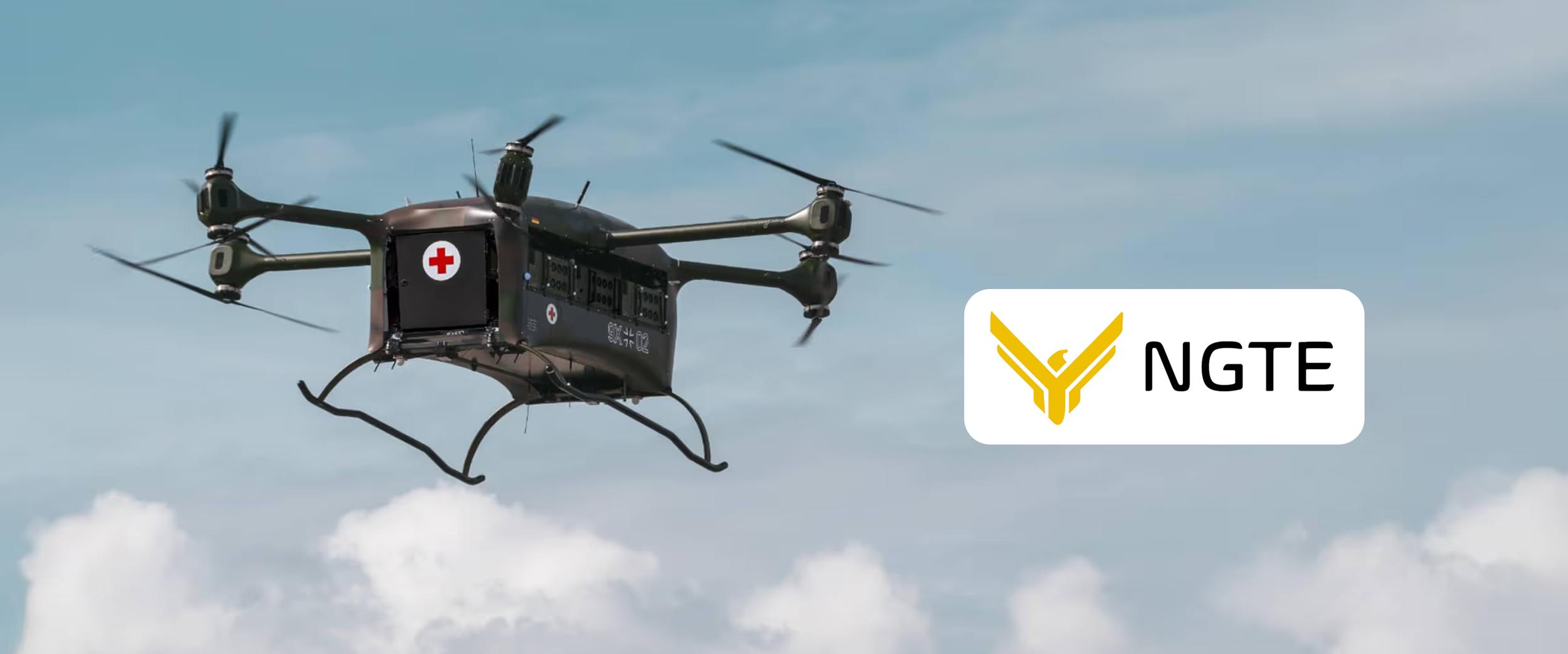
Bussard provides persistent surveillance and precision effects.
Built for Strategic Reach.
Crewed reconnaissance (ISR) assets are cost-intensive, weather-limited, or unavailable in dispersed operations. Nevertheless, tactical units need persistent, high-resolution sensors to maintain an intelligence advantage in real time.
Persistent Intelligence
Bussard combines high-performance radar and optics in a long-endurance platform. This enables day-and-night, all-weather reconnaissance with wide-area coverage, radar mapping, and automatic moving target detection. The high-resolution synthetic aperture radar (SAR) offers 360-degree coverage and real-time ground moving target indication (GMTI) while the optics provide full-motion EO/IR videos, automatic tracking, and AI-assisted object recognition.
Precision effects require confirmed targets, but joint terminal attack controllers (JTACs) are often limited by terrain, risk, or availability. A remote sensor platform is essential for safe and effective handoff in contested environments.